

Editor-reviewed by Ahmad Zaidi based on analysis by TransforML's proprietary AI
CEO, TransforML Platforms Inc. | Former Partner, McKinsey & Company
How are Cisco and Arista building the network infrastructure required for AI data centers?
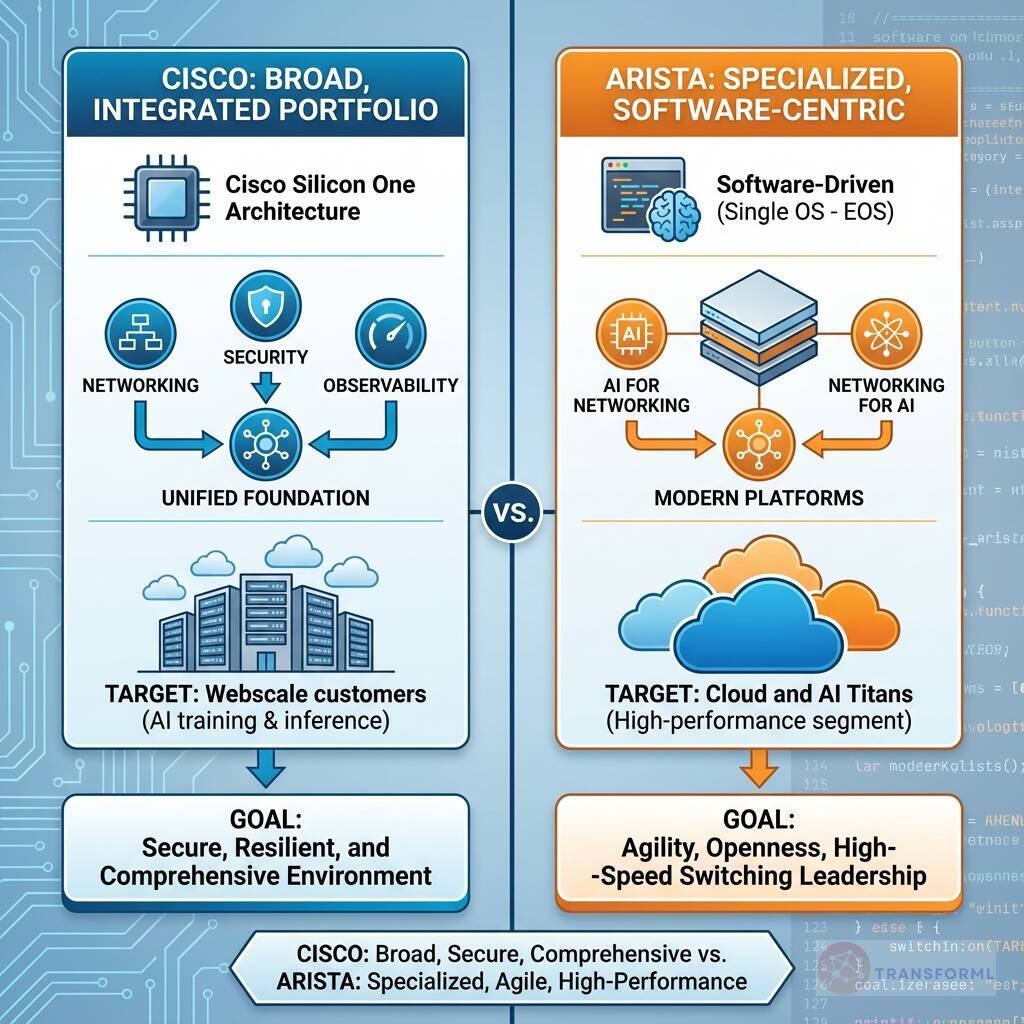
Cisco is tackling the AI infrastructure challenge with a broad, integrated portfolio approach. A central element of its strategy is leveraging its proprietary "Cisco Silicon One" architecture, aiming to "enhance performance and efficiency for AI workloads." By integrating this high-performance silicon across its product lines, Cisco provides a unified foundation for networking, security, and observability. The company is specifically targeting "Webscale customers" to provide the robust infrastructure needed for both AI training and inference. This strategy is not just about raw network speed but about creating a secure, resilient, and comprehensive environment that connects all aspects of an organization in the AI era.
Arista, in contrast, employs a more specialized and software-centric strategy, focusing intently on the highest-performing segments of the market. Its stated goal is to "Deliver modern platforms enabling AI for networking and networking for AI," targeting the demanding "Cloud and AI Titans" as its primary customer base. Arista's "how to win" is built on the strength of its single, programmable operating system (EOS), which provides agility and openness. This focus on software-driven networking and deep partnerships with the largest cloud players has allowed Arista to become a leader in high-speed data center switching, positioning it as a key enabler for the world's most advanced AI and cloud environments.
Review detailed strategy and competitive analysis of companies in Enterprise Networking Hardware
Source and Disclaimer: This article is based on analysis of Annual reports and other publicly available information. For informational purposes only (not investment, legal, or professional advice). Provided 'as is' without warranties. Trademarks and company names belong to their respective owners.