

Editor-reviewed by Ahmad Zaidi based on analysis by TransforML's proprietary AI
CEO, TransforML Platforms Inc. | Former Partner, McKinsey & Company
How are Thermo Fisher and Danaher using next-generation sequencing (NGS) and precision medicine to transform cancer research?
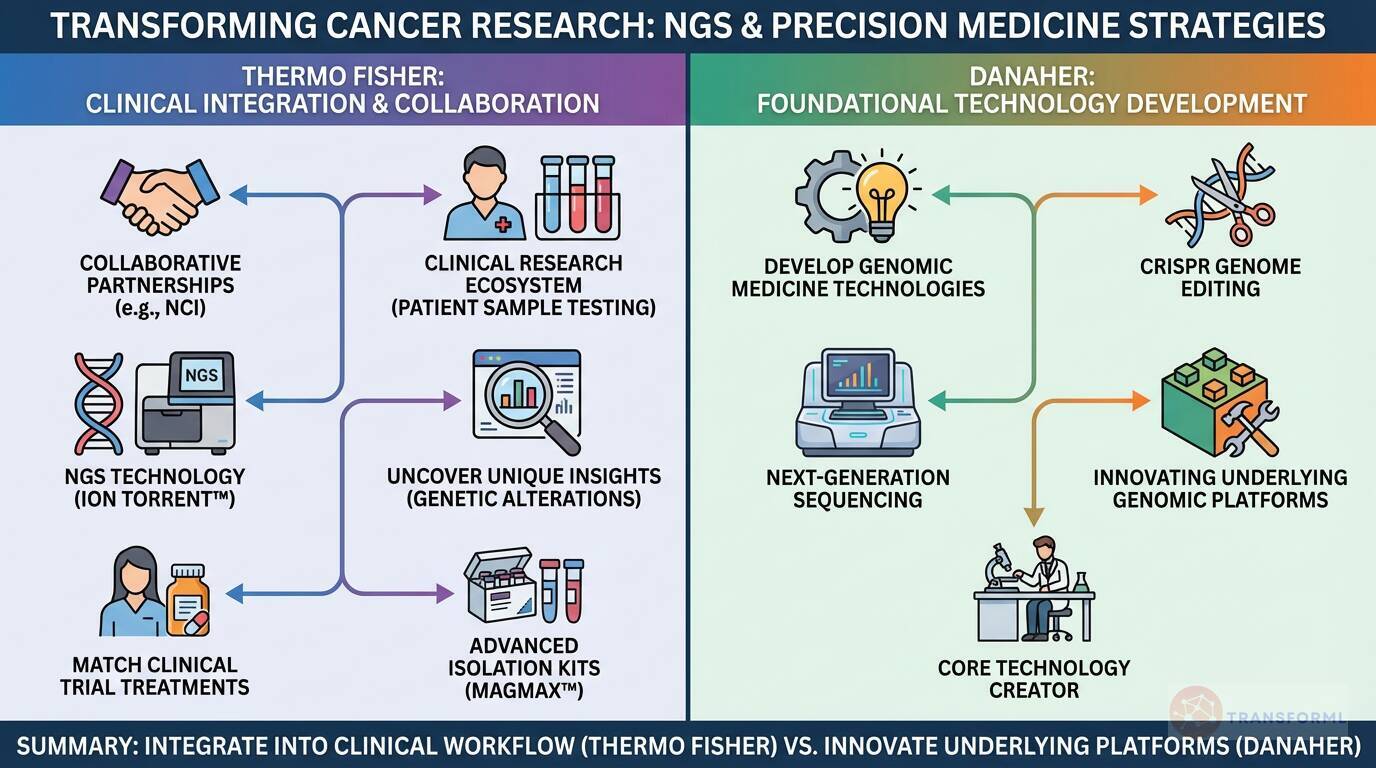
Thermo Fisher Scientific is transforming cancer research by embedding its next-generation sequencing (NGS) technology directly into the clinical research ecosystem. Their strategy is highly collaborative, focusing on partnerships with key institutions like the National Cancer Institute to support precision medicine trials. This involves using their NGS technology to test patient samples, such as blood and bone marrow, to quickly match them with appropriate clinical trial cancer treatments. This hands-on approach is further supported by product innovation, like the development of advanced DNA/RNA isolation kits (e.g., Applied Biosystems™ MagMAX™), which help researchers uncover unique insights into cancer-causing genetic alterations.
Danaher's strategy, while also focused on advancing human health, is more centered on the foundational development of proprietary technologies that enable this research. Their goal is to "Develop Genomic Medicine Technologies," which explicitly includes next-generation sequencing and CRISPR genome editing. This positions Danaher as a core technology creator, aiming to build the essential tools that researchers use. While Thermo Fisher's approach is to partner and integrate its existing solutions directly into the clinical workflow, Danaher's focus is on innovating the underlying genomic platforms themselves, providing the building blocks for future breakthroughs in precision medicine.
Review detailed strategy and competitive analysis of companies in Life-Science Tools & Diagnostics
Source and Disclaimer: This article is based on analysis of Annual reports and other publicly available information. For informational purposes only (not investment, legal, or professional advice). Provided 'as is' without warranties. Trademarks and company names belong to their respective owners.