

Editor-reviewed by Ahmad Zaidi based on analysis by TransforML's proprietary AI
CEO, TransforML Platforms Inc. | Former Partner, McKinsey & Company
What is the best strategy for modernizing IT infrastructure: A full-stack solution from Broadcom and VMware or an ecosystem approach with QUALCOMM's Snapdragon?
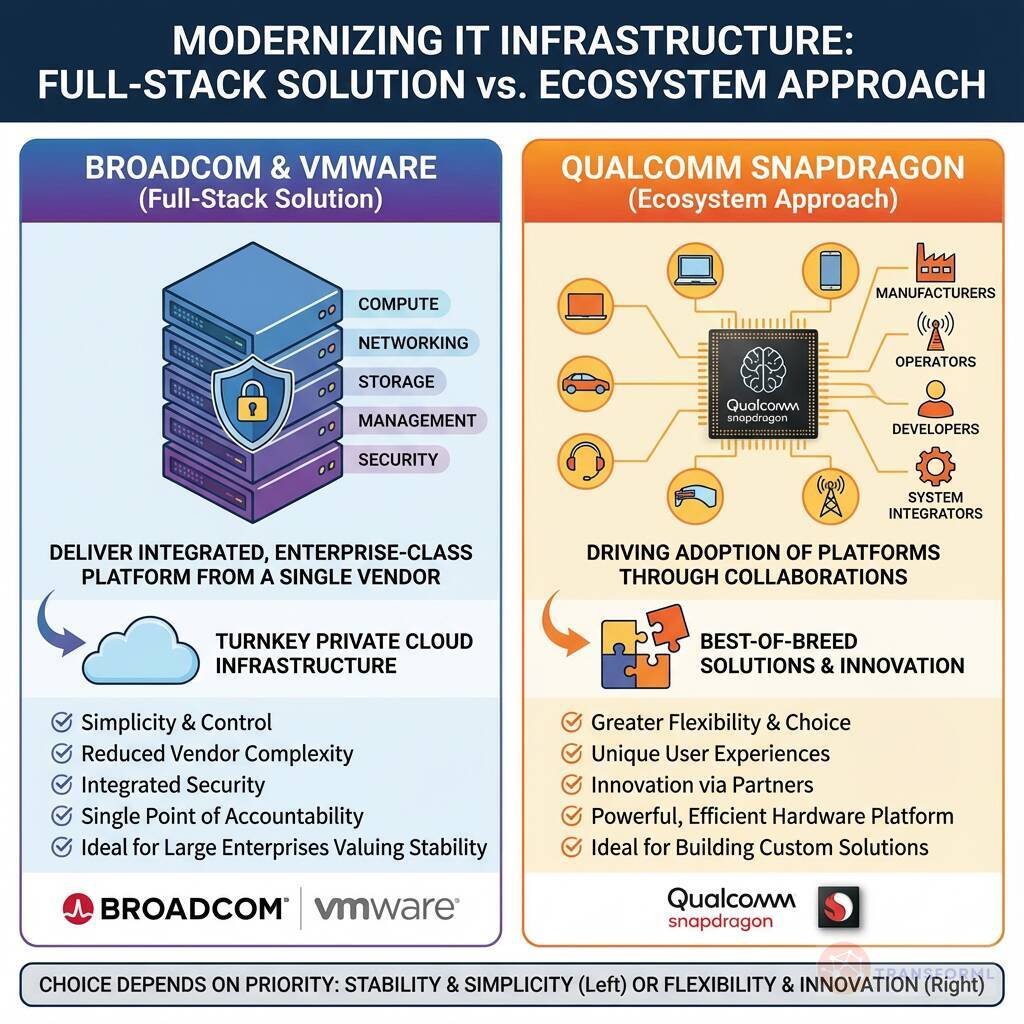
The best strategy depends on an organization's priorities, with Broadcom offering a simplified, integrated full-stack solution. Through strategic acquisitions of companies like VMware, CA, and Symantec, Broadcom's goal is to "Deliver Integrated, Enterprise-Class Compute, Networking, Storage, Management, and Security" from a single vendor. This approach is designed to help enterprises "Modernize, Optimize, and Secure Complex IT Environments" by providing a pre-integrated platform. The key advantage is simplicity and control; customers get a turnkey private cloud infrastructure where all the components are designed to work together, reducing vendor management complexity and potentially lowering the total cost of ownership. This strategy is ideal for large enterprises that value stability, security, and a single point of accountability.
Conversely, QUALCOMM champions an ecosystem approach, which offers greater flexibility and choice. Instead of selling a complete IT stack, QUALCOMM focuses on being a key technology enabler by driving the "Adoption of Snapdragon Platforms." Its strategy involves "forging collaborations with manufacturers, operators, developers, and system integrators" across various industries. For example, by promoting its Snapdragon chips for "AI-Focused PCs," QUALCOMM provides the core engine, but allows PC manufacturers like Dell, HP, or Lenovo to innovate and differentiate on software, form factor, and features. This approach is best for companies that want to build best-of-breed solutions by picking components from different vendors or for product manufacturers who want to create unique user experiences based on a powerful, efficient, and well-supported hardware platform.
Review detailed strategy and competitive analysis of companies in Connectivity & Networking Chips
Source and Disclaimer: This article is based on analysis of Annual reports and other publicly available information. For informational purposes only (not investment, legal, or professional advice). Provided 'as is' without warranties. Trademarks and company names belong to their respective owners.