

Editor-reviewed by Ahmad Zaidi based on analysis by TransforML's proprietary AI
CEO, TransforML Platforms Inc. | Former Partner, McKinsey & Company
Choosing a Platform Strategy: What are the differences between Salesforce's best-of-breed "#1 AI CRM" approach and Microsoft's integrated productivity suite (Dynamics 365 + M365)?
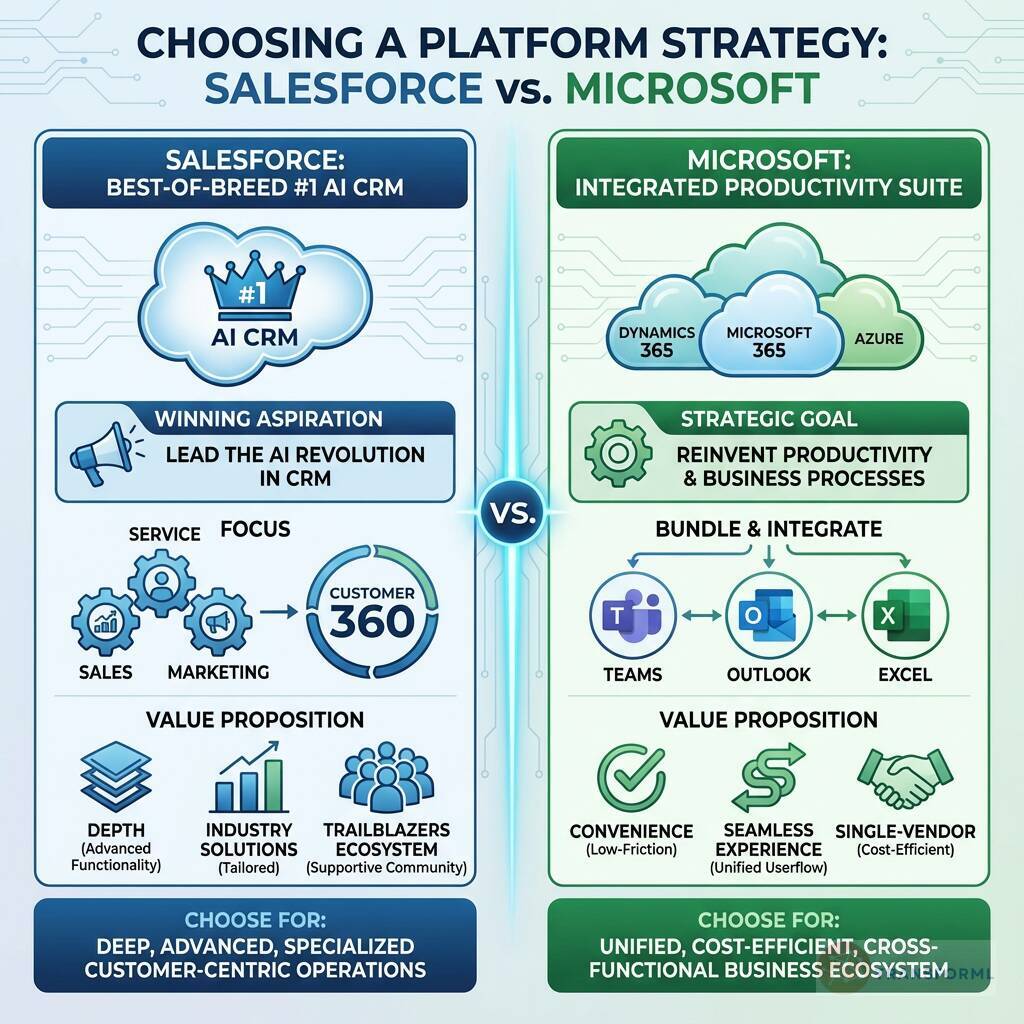
Salesforce's strategy is a classic "best-of-breed" approach, centered on a singular Winning Aspiration: to "lead the AI revolution in the CRM space." The company focuses all its efforts on building the most comprehensive and powerful AI-powered CRM platform on the market, the Customer 360. This strategy is for businesses that want the deepest possible functionality for their sales, service, and marketing teams and are willing to invest in a specialized, market-leading solution. The value proposition is depth, industry-specific solutions, and a massive, supportive ecosystem of "Trailblazers." Customers choose Salesforce when their top priority is to have the most advanced, dedicated CRM system to drive customer-centric operations.
Microsoft employs an "integrated suite" strategy, leveraging its dominance in other enterprise software categories to create a compelling, unified value proposition. By bundling Dynamics 365 with Microsoft 365 and Azure, its goal is to Reinvent Productivity and Business Processes across the entire organization, not just in the front office. The key advantage is convenience and a seamless user experience, as CRM capabilities are woven into the productivity and collaboration tools (like Teams and Outlook) that employees use every day. This creates a low-friction alternative that is attractive to the millions of organizations already invested in the Microsoft ecosystem. Customers choose this path when they prioritize a single-vendor relationship, cost-efficiency, and deep integration across all business functions.
Review detailed strategy and competitive analysis of companies in CRM & Customer-Experience Suites
Source and Disclaimer: This article is based on analysis of Annual reports and other publicly available information. For informational purposes only (not investment, legal, or professional advice). Provided 'as is' without warranties. Trademarks and company names belong to their respective owners.