

Editor-reviewed by Ahmad Zaidi based on analysis by TransforML's proprietary AI
CEO, TransforML Platforms Inc. | Former Partner, McKinsey & Company
How are Salesforce and Microsoft using Generative AI (Einstein vs. Copilot) to transform CRM for sales, service, and marketing teams?
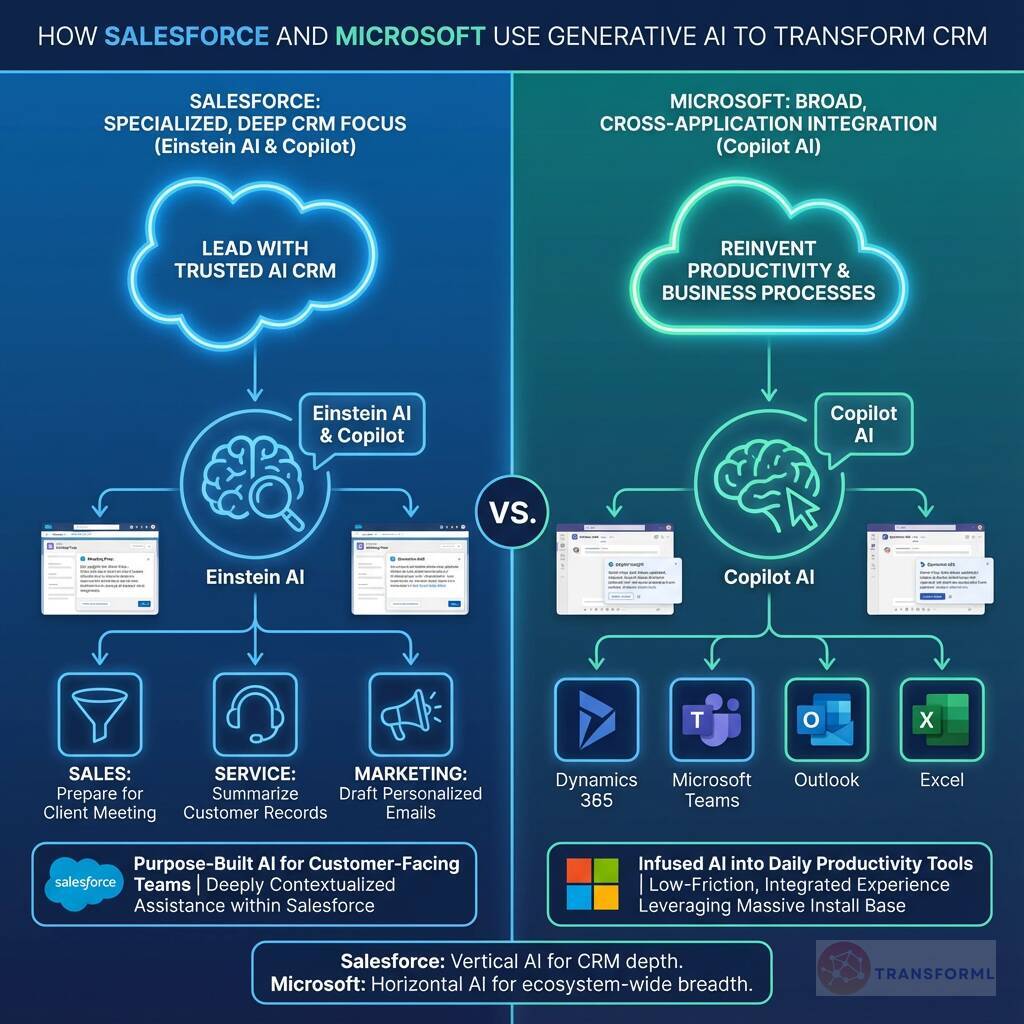
Salesforce is transforming CRM with a highly specialized AI strategy, embedding its Einstein AI, including Einstein Copilot, directly into its core products. The company's primary goal is to Lead with Trusted AI CRM, focusing on making sales, service, and marketing professionals more productive within the Salesforce environment. This is evident in objectives like Accelerate Einstein Copilot Development and Integrate AI into Core CRM Applications. The aim is to provide AI assistance that is deeply contextualized for CRM tasks, such as summarizing customer records for a service agent, drafting personalized marketing emails, or preparing a sales representative for a client meeting. Salesforce's approach is vertical, designed to create the most powerful, purpose-built AI for customer-facing teams on a single platform.
Microsoft takes a broader, horizontal approach by integrating its Copilot AI across its entire ecosystem, including Dynamics 365 and the widely used Microsoft 365 productivity suite. The strategy is to Reinvent Productivity and Business Processes by infusing AI into the daily tools employees already use, such as Teams, Outlook, and Excel. For CRM, this means AI assistance is not confined to the CRM application itself. A salesperson can get AI-powered insights from Dynamics 365 directly within a Teams chat or an Outlook email. This creates a low-friction, integrated experience that leverages Microsoft's massive install base, contrasting Salesforce's deep CRM focus with Microsoft's strength in widespread, cross-application productivity enhancement.
Review detailed strategy and competitive analysis of companies in CRM & Customer-Experience Suites
Source and Disclaimer: This article is based on analysis of Annual reports and other publicly available information. For informational purposes only (not investment, legal, or professional advice). Provided 'as is' without warranties. Trademarks and company names belong to their respective owners.