

Editor-reviewed by Ahmad Zaidi based on analysis by TransforML's proprietary AI
CEO, TransforML Platforms Inc. | Former Partner, McKinsey & Company
Private Label Power: How are Costco's Kirkland Signature and Walmart's private brands shaping their competitive advantage and customer loyalty?
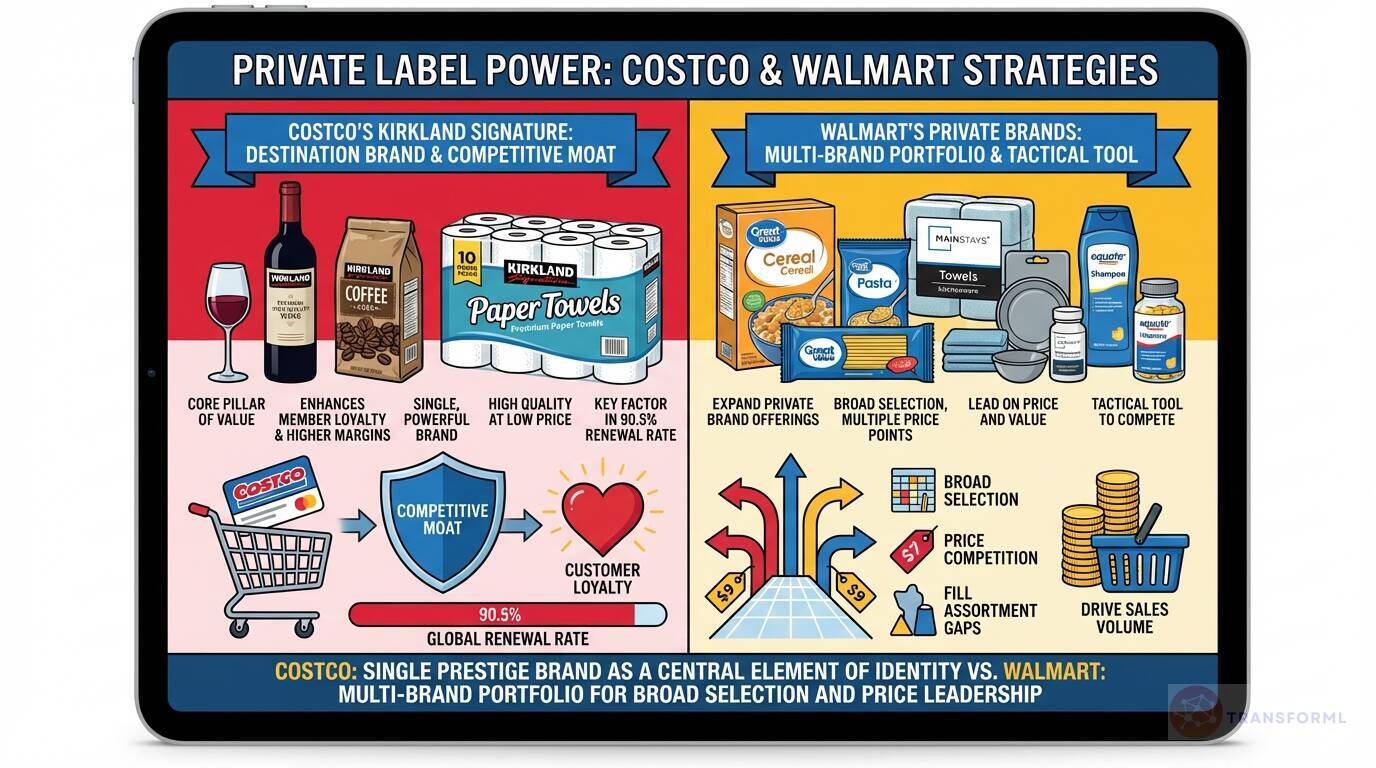
Costco's Kirkland Signature and Walmart's private brands serve different strategic purposes and have distinct impacts on their business models. For Costco, Kirkland Signature is not just a private label; it's a "destination brand" and a core pillar of its value proposition. The data highlights that the brand is a key differentiator that "enhances member loyalty and driving higher margins." Costco employs a singular, powerful brand strategy, where Kirkland Signature embodies the company's promise of high quality at a low price, making it a primary reason for customers to maintain their membership and a key factor in its 90.5% global renewal rate.
Walmart, on the other hand, employs a multi-brand private label strategy, including names like 'Great Value,' 'Mainstays,' and 'Equate.' Its goal is to "Expand Private Brand Offerings" across a wide range of categories and price points to support its overall strategy to "Lead on Price and Value." Unlike Costco's focus on a single prestige private brand, Walmart uses its portfolio of brands as a tactical tool to offer broad selection, compete on price against national brands, and fill assortment gaps. While effective for driving sales volume, this approach does not create the same "destination" allure as Kirkland Signature, which functions as a competitive moat and a central element of Costco's unique identity.
Review detailed strategy and competitive analysis of companies in Retail
Source and Disclaimer: This article is based on analysis of Annual reports and other publicly available information. For informational purposes only (not investment, legal, or professional advice). Provided 'as is' without warranties. Trademarks and company names belong to their respective owners.