

Editor-reviewed by Ahmad Zaidi based on analysis by TransforML's proprietary AI
CEO, TransforML Platforms Inc. | Former Partner, McKinsey & Company
How are P&G, PepsiCo, and Coca-Cola using sustainable packaging and circular economy models to win over environmentally-conscious consumers?
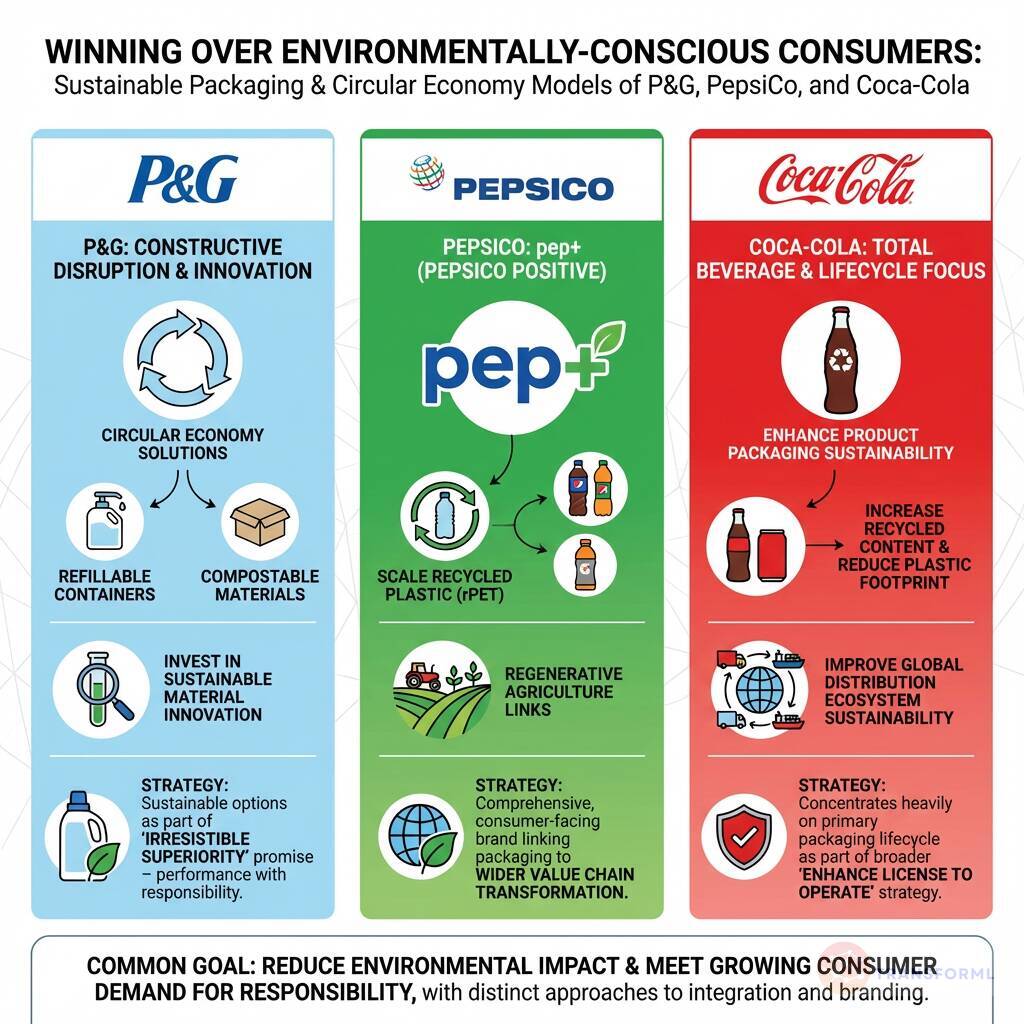
Consumer staples giants like P&G, PepsiCo, and Coca-Cola are embedding sustainable packaging into their core strategies to meet growing consumer demand for environmental responsibility. P&G's approach is tied to its "Constructive Disruption" pillar, with goals to Pilot Circular Economy Packaging Solutions like refillable containers and compostable materials, and to Invest in Sustainable Material Innovation. PepsiCo frames its efforts under the highly marketable "pep+ (PepsiCo Positive)" initiative, focusing on tangible goals such as scaling the use of recycled plastic (rPET) across its brands. Similarly, Coca-Cola aims to Enhance Product Packaging Sustainability by increasing recycled content and reducing its plastic footprint as part of its broader "Enhance License to Operate" strategy.
While all three companies are focused on reducing their environmental impact, their approaches have distinct characteristics. PepsiCo's "pep+" program stands out as a comprehensive, consumer-facing brand that links packaging sustainability to a wider value chain transformation, including regenerative agriculture. P&G's strategy is deeply integrated with its R&D and innovation engine, aiming to make sustainable options part of its "Irresistible Superiority" promise, where environmental responsibility enhances product appeal without compromising performance. Coca-Cola, as a total beverage company, concentrates heavily on the lifecycle of its primary packaging—bottles and cans—and works to improve the sustainability of its vast global distribution ecosystem.
Review detailed strategy and competitive analysis of companies in Consumer Staples
Source and Disclaimer: This article is based on analysis of Annual reports and other publicly available information. For informational purposes only (not investment, legal, or professional advice). Provided 'as is' without warranties. Trademarks and company names belong to their respective owners.