

Editor-reviewed by Ahmad Zaidi based on analysis by TransforML's proprietary AI
CEO, TransforML Platforms Inc. | Former Partner, McKinsey & Company
What are the next major advertising frontiers for Meta and Alphabet beyond the social feed and search results?
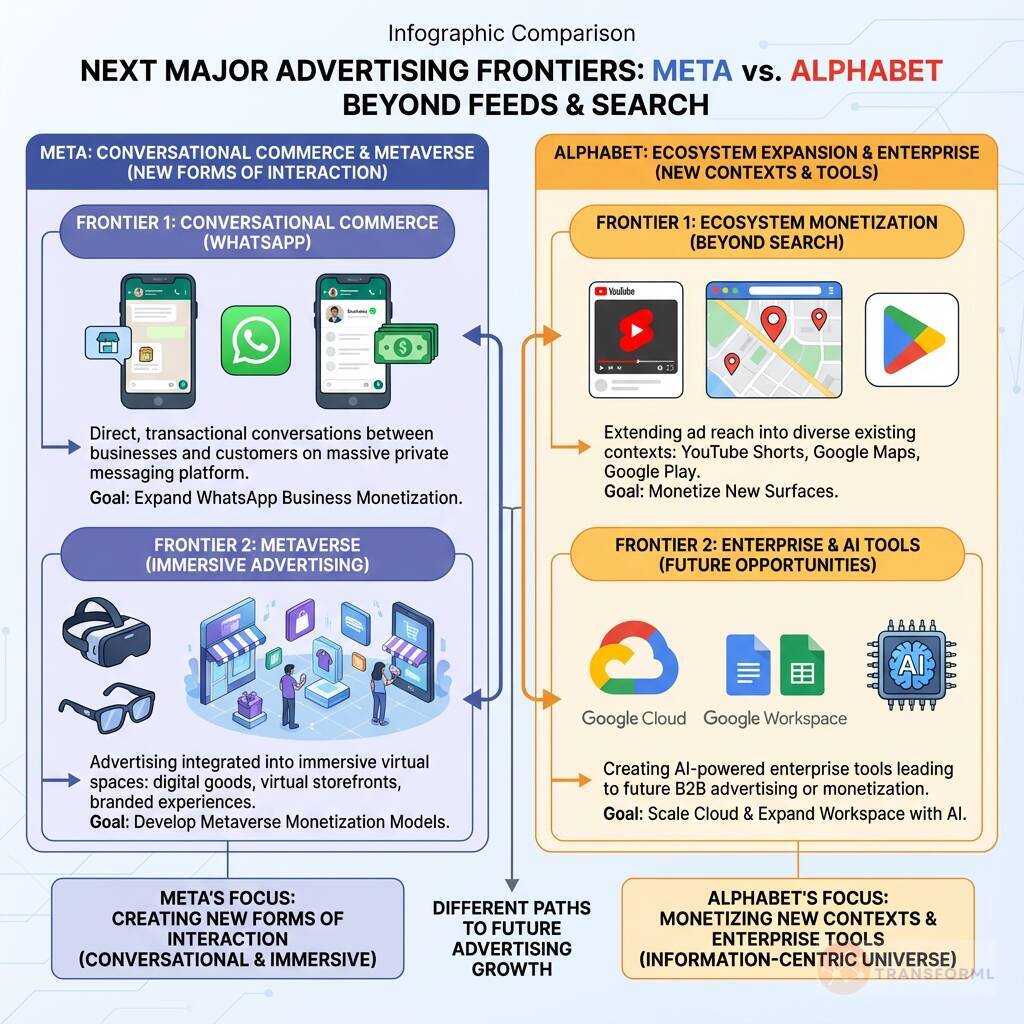
Meta is pushing into two major new advertising frontiers: conversational commerce and the Metaverse. The first is an immediate focus, with the stated goal to "Expand WhatsApp Business Monetization." This strategy moves beyond passive ad views in a public feed to enable direct, transactional conversations between businesses and customers on a massive, private messaging platform. The second, more long-term frontier is the Metaverse itself. By working to "Develop Metaverse Monetization Models," Meta is planning for a future where advertising is integrated into immersive virtual spaces through digital goods, virtual storefronts, and branded experiences, fundamentally changing brand interaction.
Alphabet's next frontiers involve expanding its advertising model deeper into its existing, diverse ecosystem and growing its enterprise offerings. Beyond Search, the company is monetizing surfaces like YouTube Shorts, Google Maps, and Google Play, extending its ad reach into new contexts. Furthermore, Alphabet is heavily focused on its enterprise segment with its objective to "Scale Google Cloud" and "Expand Google Workspace Features" with AI. While not a direct advertising play, creating AI-powered enterprise tools could open future monetization or B2B advertising opportunities. In short, Meta's frontiers are about creating new forms of interaction (conversational and immersive), while Alphabet's are about monetizing new contexts within its existing information-centric universe.
Review detailed strategy and competitive analysis of companies in Digital-Advertising Platforms
Source and Disclaimer: This article is based on analysis of Annual reports and other publicly available information. For informational purposes only (not investment, legal, or professional advice). Provided 'as is' without warranties. Trademarks and company names belong to their respective owners.