

Editor-reviewed by Ahmad Zaidi based on analysis by TransforML's proprietary AI
CEO, TransforML Platforms Inc. | Former Partner, McKinsey & Company
Meta's Metaverse vs. Alphabet's Moonshots: How do their long-term innovation strategies impact the future of digital engagement and advertising?
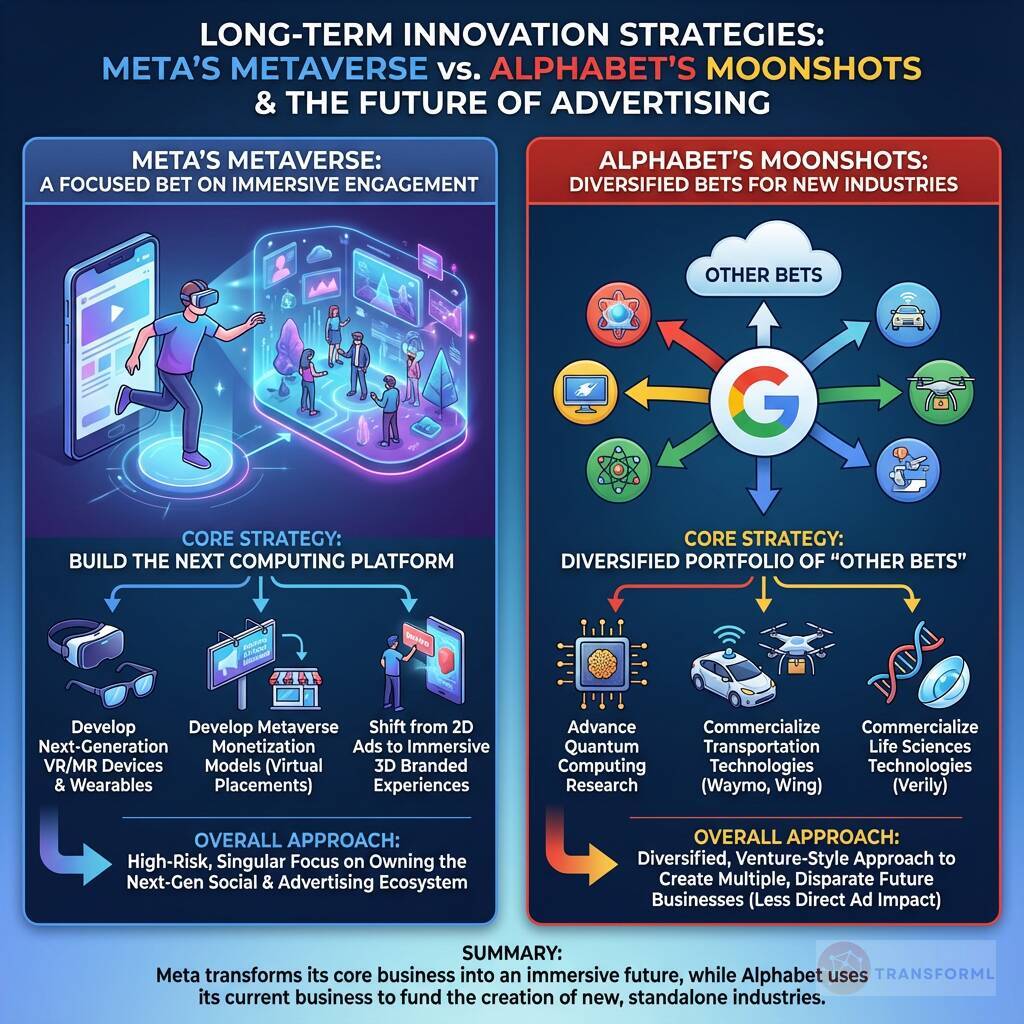
Meta's long-term strategy is a focused, singular bet on building the Metaverse as the next computing platform. This is not a side project but a "core, publicly-stated strategic pillar" that consumes a significant portion of its capital. By pursuing goals like "Advance the Metaverse and Wearables" and "Develop Next-Generation VR/MR Devices," Meta aims to shift digital engagement from 2D screens to fully immersive 3D experiences. The future of advertising in this vision involves entirely new formats, as seen in the objective to "Develop Metaverse Monetization Models," which includes virtual product placements and branded digital experiences. This is a high-risk attempt to own the entire next-generation social and advertising ecosystem.
In contrast, Alphabet's long-term innovation strategy is a diversified portfolio of "moonshots" under its "Other Bets" segment, such as "Advance Quantum Computing Research" and commercializing transportation technologies. Unlike Meta's unified vision, Alphabet's goal is to "Commercialize Other Bets Technologies" into new, potentially standalone businesses rather than integrating them into a single future advertising platform. The impact on advertising is therefore less direct; these bets are designed to find the next Google in various industries, not necessarily to evolve the current advertising model. While Meta is trying to transform its core business into an immersive future, Alphabet is using its current business to fund the creation of multiple, disparate future businesses.
Review detailed strategy and competitive analysis of companies in Digital-Advertising Platforms
Source and Disclaimer: This article is based on analysis of Annual reports and other publicly available information. For informational purposes only (not investment, legal, or professional advice). Provided 'as is' without warranties. Trademarks and company names belong to their respective owners.