

Editor-reviewed by Ahmad Zaidi based on analysis by TransforML's proprietary AI
CEO, TransforML Platforms Inc. | Former Partner, McKinsey & Company
How are Siemens, WEG, and Schneider Electric using Digital Twins and AI to build a resilient and intelligent power grid?
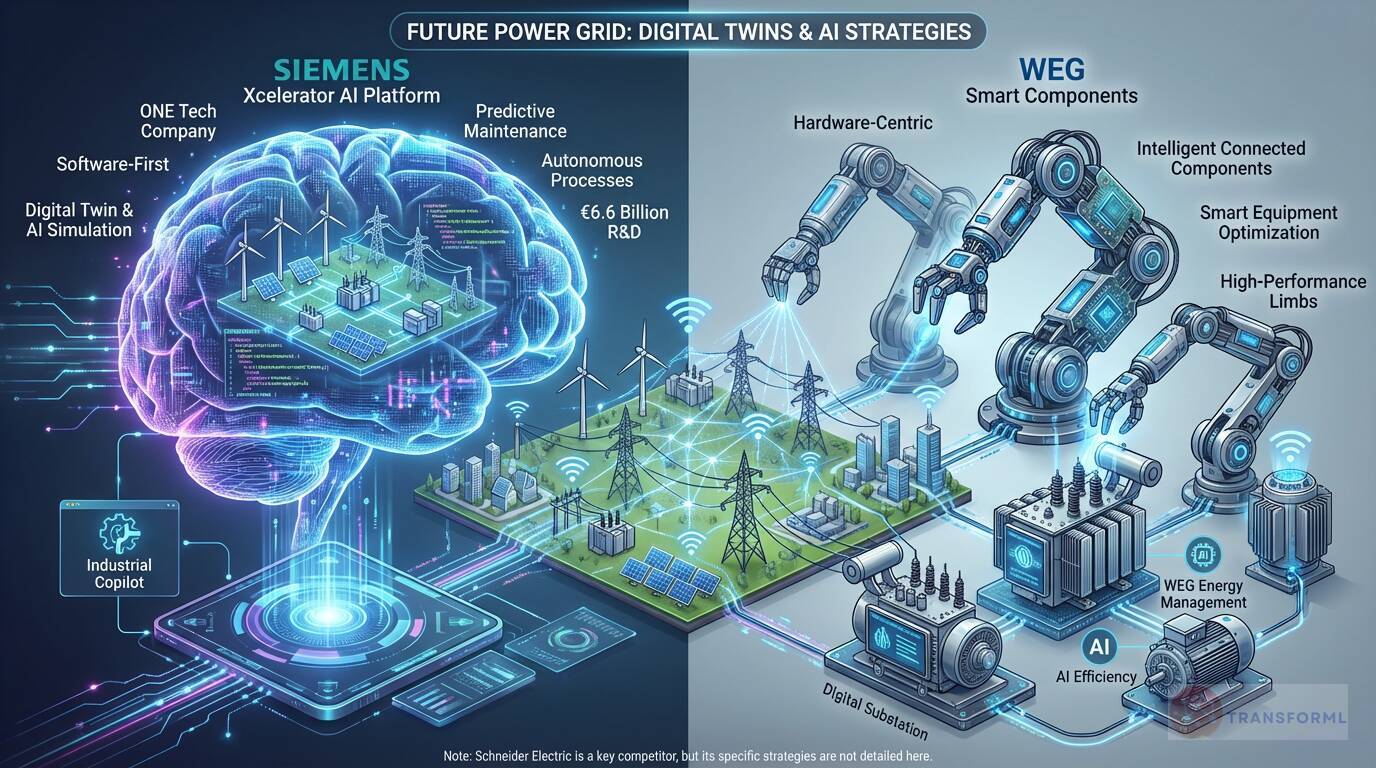
Siemens is aggressively pursuing a software-first strategy to create an intelligent grid, centered on its "ONE Tech Company" vision. The core of this approach is the Siemens Xcelerator platform, an open digital ecosystem designed to merge operational technology (OT) with information technology (IT). For the power grid, Siemens is actively developing "simulation and digital twin technologies that mirror physical assets" to optimize grid design and operation before a single piece of hardware is deployed. This is backed by a massive €6.6 billion R&D investment (8.3% of revenue) and advanced AI capabilities, such as the Industrial Copilot, which uses AI agents to enable autonomous processes. By focusing on a comprehensive digital platform, Siemens aims to be the central nervous system of the future grid, offering predictive maintenance, optimized energy flows, and enhanced resilience.
In contrast, WEG's application of AI and digital technologies is more focused on enhancing its hardware-centric portfolio. While it is developing "Digital Substation solutions" and a "WEG Energy Management" platform that uses cloud computing and AI, these serve primarily to make its own best-in-class equipment smarter and more efficient. WEG's strategy is not to build a universal platform like Xcelerator but to provide intelligent, connected components that can operate within any grid ecosystem. The strategic difference is clear: Siemens is building the overarching digital brain for the grid, while WEG is perfecting the intelligent, high-performance limbs. (Note: While Schneider Electric is a key competitor for both companies, its specific strategies are not detailed in the provided data).
Review detailed strategy and competitive analysis of companies in Power Grid Equipment
Source and Disclaimer: This article is based on analysis of Annual reports and other publicly available information. For informational purposes only (not investment, legal, or professional advice). Provided 'as is' without warranties. Trademarks and company names belong to their respective owners.