

Editor-reviewed by Ahmad Zaidi based on analysis by TransforML's proprietary AI
CEO, TransforML Platforms Inc. | Former Partner, McKinsey & Company
Ad-Supported vs. Premium Tiers: What are the pricing and monetization strategies for Netflix, Disney+, and Amazon Prime Video?
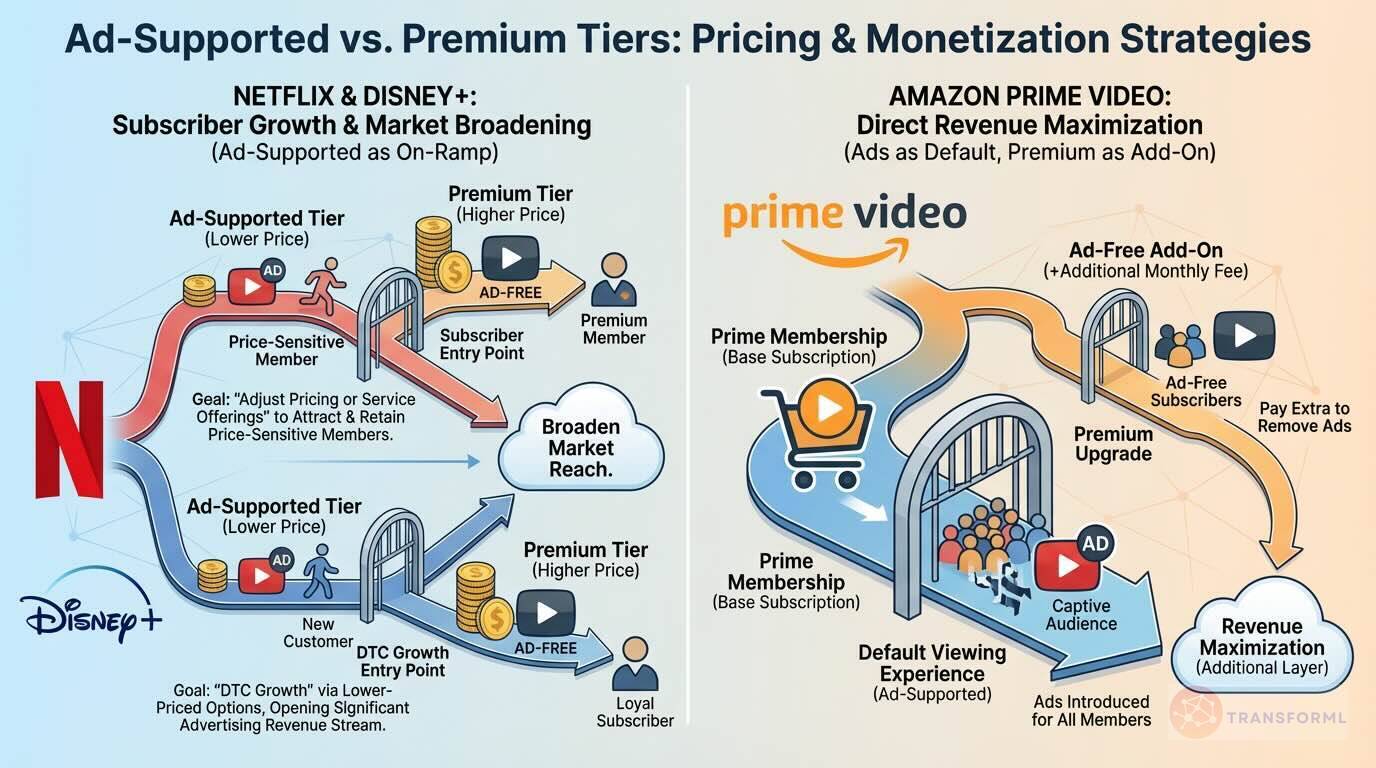
Netflix, Disney, and Amazon have all moved away from single-price models to a multi-tiered approach that includes ad-supported plans, but their underlying strategic goals differ. Netflix and Disney use ad-supported tiers primarily to drive subscriber growth and broaden their market. Netflix's goal to "Adjust Pricing or Service Offerings" by improving its ad-supported plan is aimed directly at attracting and retaining "price-sensitive members" who might otherwise not subscribe. Similarly, Disney focuses on "DTC Growth" by offering lower-priced ad-supported options for Disney+ and Hulu, providing a crucial entry point for new customers and opening up a significant advertising revenue stream.
Amazon's recent monetization strategy for Prime Video takes a different path. While its streaming service is part of the overall Prime membership, the company has now introduced ads to the default viewing experience for all members. To go ad-free, subscribers must pay an additional monthly fee. This approach is less about attracting new subscribers—as they are already in the Prime ecosystem—and more about direct revenue maximization from its massive, captive audience. While Netflix and Disney use ads as an on-ramp to their service, Amazon is using ads to add a new layer of monetization on top of its existing, highly successful subscription bundle.
Review detailed strategy and competitive analysis of companies in Streaming-Video Services
Source and Disclaimer: This article is based on analysis of Annual reports and other publicly available information. For informational purposes only (not investment, legal, or professional advice). Provided 'as is' without warranties. Trademarks and company names belong to their respective owners.