

Editor-reviewed by Ahmad Zaidi based on analysis by TransforML's proprietary AI
CEO, TransforML Platforms Inc. | Former Partner, McKinsey & Company
How do the content strategies of Netflix (Originals), Disney+ (Iconic IP), and Peacock (Live Sports) compare in the streaming wars?
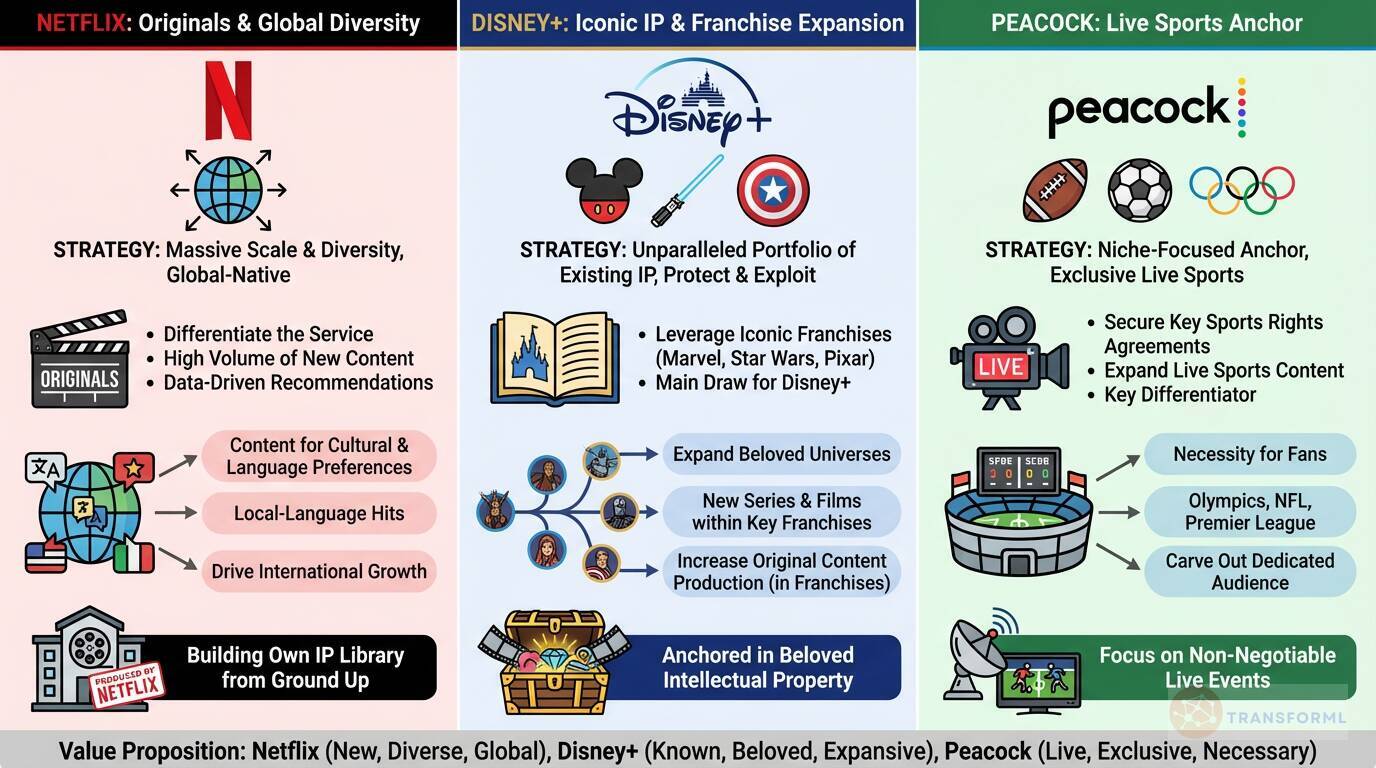
These companies showcase three distinct and competing content philosophies. Netflix pursues a strategy of massive scale and diversity, aiming to "Differentiate the Service" by investing heavily in a broad catalog of exclusive original programming. A core part of this is its "global-native" approach, which focuses on adapting "Content for Cultural and Language Preferences" by producing local-language hits to drive international growth. Netflix's model relies on a high volume of new content and data-driven recommendations to ensure there is always something new for every subscriber segment, building a library of its own intellectual property from the ground up.
In contrast, Disney's strategy is anchored in its unparalleled portfolio of existing intellectual property (IP). Its primary goal is to "Protect and Exploit Intellectual Property," leveraging iconic franchises like Marvel, Star Wars, and Pixar to be the main draw for Disney+. Instead of creating a high volume of brand-new concepts, Disney focuses on expanding these beloved universes through new series and films, as seen in its goal to "Increase Original Content Production" within these key franchises. Comcast's Peacock employs a more niche-focused anchor strategy, using exclusive live sports as its key differentiator. A primary objective for Peacock is to "Secure Key Sports Rights Agreements" and "Expand Live Sports Content," making the service a necessity for fans of the Olympics, NFL, and Premier League, thereby carving out a dedicated audience in a crowded market.
Review detailed strategy and competitive analysis of companies in Streaming-Video Services
Source and Disclaimer: This article is based on analysis of Annual reports and other publicly available information. For informational purposes only (not investment, legal, or professional advice). Provided 'as is' without warranties. Trademarks and company names belong to their respective owners.