

Editor-reviewed by Ahmad Zaidi based on analysis by TransforML's proprietary AI
CEO, TransforML Platforms Inc. | Former Partner, McKinsey & Company
Who is Winning the Hypersonic Race: A Look at Lockheed Martin vs. RTX's Development Strategies?
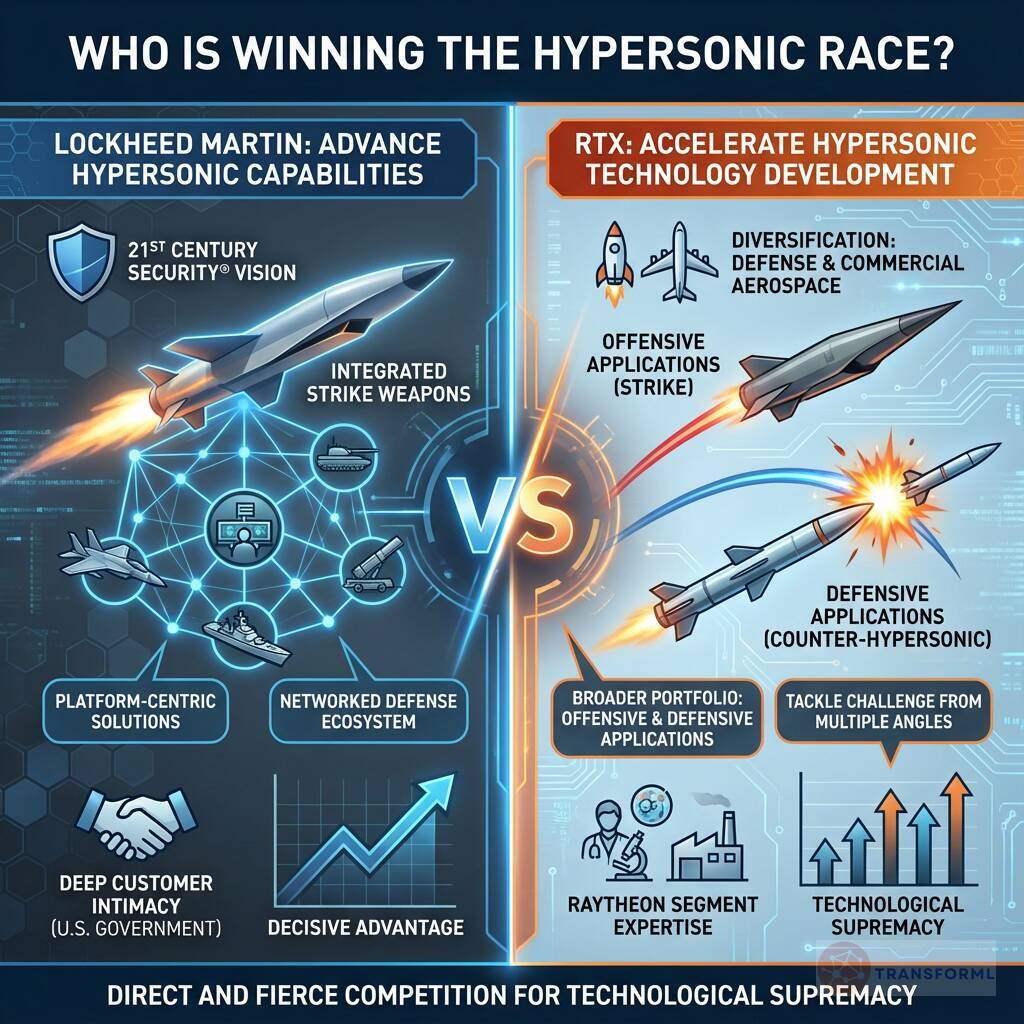
Lockheed Martin is leveraging its position as a pure-play defense contractor to "Advance Hypersonic Capabilities" as a core component of its overarching "21st Century Security®" vision. With 73% of its sales coming from the U.S. government, Lockheed Martin maintains deep customer intimacy, focusing its efforts on developing hypersonic strike weapons for the U.S. Air Force and Army. Its strategy is to integrate these advanced technologies into a broader, networked defense ecosystem, aiming to deliver cohesive, platform-centric solutions that maintain a decisive advantage for its primary government customers.
RTX is also a major contender, with a strategic goal to "Accelerate Hypersonic Technology Development," but its approach is notably different. Leveraging its unique diversification across defense and commercial aerospace, RTX is developing systems for "both offensive and defensive applications." This broader scope allows it to tackle the hypersonic challenge from multiple angles, potentially using its Raytheon segment's expertise in missile defense to create counter-hypersonic systems. While Lockheed focuses on integrated strike platforms, RTX's strategy leverages its breadth to develop a wider portfolio of hypersonic and counter-hypersonic capabilities, creating a direct and fierce competition for technological supremacy.
Review detailed strategy and competitive analysis of companies in Aerospace & Defense Contractors
Source and Disclaimer: This article is based on analysis of Annual reports and other publicly available information. For informational purposes only (not investment, legal, or professional advice). Provided 'as is' without warranties. Trademarks and company names belong to their respective owners.