

Editor-reviewed by Ahmad Zaidi based on analysis by TransforML's proprietary AI
CEO, TransforML Platforms Inc. | Former Partner, McKinsey & Company
NVIDIA's CUDA vs. AMD's ROCm: How are closed and open software ecosystems competing to power the Generative AI revolution?
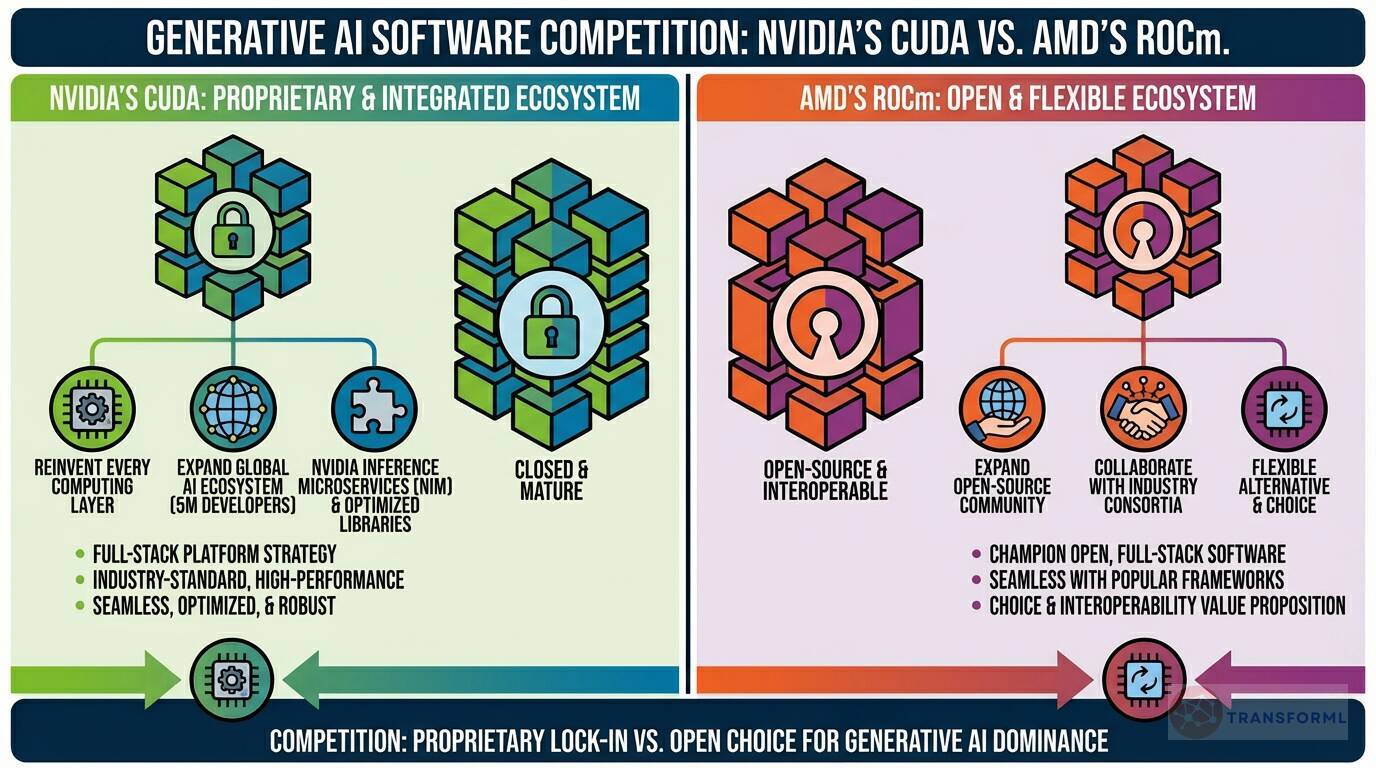
NVIDIA is powering the Generative AI revolution through its mature, proprietary, and deeply integrated CUDA ecosystem. This "full-stack platform" strategy involves reinventing every layer of computing, from the GPU architecture to the software. NVIDIA's primary goal is to "Expand the Global AI Ecosystem" around CUDA, with ambitions to grow its developer base to 5 million. It builds on this lead with tools like NVIDIA Inference Microservices (NIM) and optimized libraries that create a powerful lock-in effect, making CUDA the industry-standard, high-performance choice for developers and enterprises building AI applications. This closed but comprehensive ecosystem provides a seamless, optimized, and robust environment that is difficult for competitors to replicate.
In direct response, AMD is championing an "open, full-stack AI software ecosystem" centered on its ROCm platform. This strategy is designed to attract developers and customers who are wary of NVIDIA's proprietary model and potential for vendor lock-in. AMD's goals are to "Enhance [the] ROCm Software Stack" and "Expand Open-Source Community Support," positioning itself as the flexible alternative. By collaborating with open industry consortia like UALink and UEC and ensuring its hardware works seamlessly with popular frameworks like PyTorch and over a million models on Hugging Face, AMD is not just competing on chip performance but on a philosophical difference, offering choice and interoperability as a key value proposition to challenge NVIDIA's dominance.
Review detailed strategy and competitive analysis of companies in GPU & High-Performance Compute Chips
Source and Disclaimer: This article is based on analysis of Annual reports and other publicly available information. For informational purposes only (not investment, legal, or professional advice). Provided 'as is' without warranties. Trademarks and company names belong to their respective owners.