

Editor-reviewed by Ahmad Zaidi based on analysis by TransforML's proprietary AI
CEO, TransforML Platforms Inc. | Former Partner, McKinsey & Company
Digital Factory Showdown: How Do GE's FLIGHT DECK, Lockheed's 1LMX, and RTX's RLPM Drive Operational Excellence?
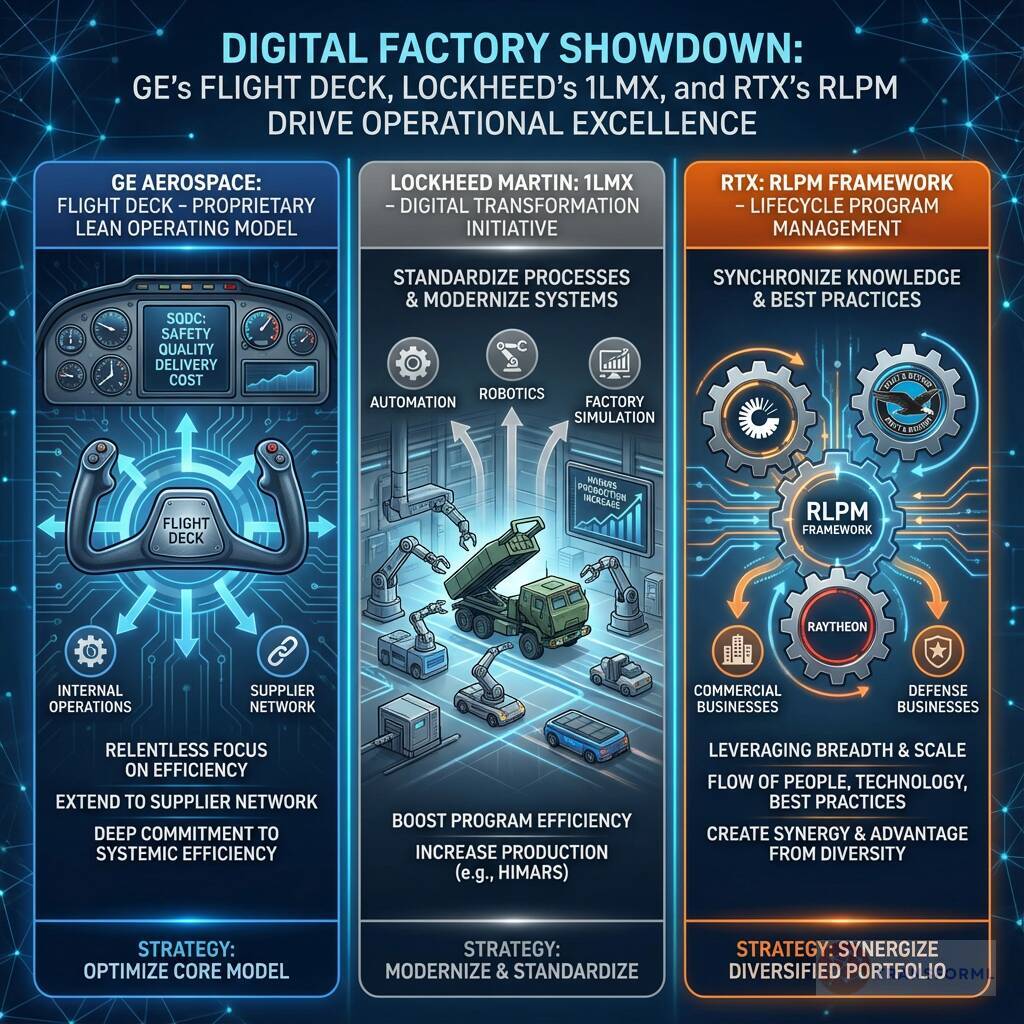
GE Aerospace and Lockheed Martin have implemented distinct, internally focused systems to drive efficiency. GE's strategy is built around "FLIGHT DECK," a branded, proprietary lean operating model that relentlessly focuses on "safety, quality, delivery, and cost (SQDC)." It is a core part of the company's identity and is being implemented across all operations, with plans to "Extend FLIGHT DECK to Supplier Network," demonstrating a deep commitment to systemic efficiency. Lockheed Martin's "1LMX" is a more traditional digital transformation initiative aimed at standardizing processes and modernizing systems. It uses tools like "Automation, Robotics and Factory Simulation" to boost efficiency in specific programs, such as increasing production for its HIMARS rocket system.
RTX's approach, the "RTX Lifecycle Program Management (RLPM)" framework, is uniquely tailored to its diversified structure. While it also aims to standardize processes, its primary function is to "Synchronize knowledge and best practices" across the company's distinct commercial and defense businesses. RLPM is the key enabler of RTX's "Leveraging our breadth and scale" strategy, designed to facilitate the "flow of people, technology, and best practices" between its Collins, Pratt & Whitney, and Raytheon segments. Therefore, while GE's and Lockheed's systems are about optimizing their respective business models, RTX's RLPM is a crucial tool for creating synergy and competitive advantage from its unparalleled portfolio diversity.
Review detailed strategy and competitive analysis of companies in Aerospace & Defense Contractors
Source and Disclaimer: This article is based on analysis of Annual reports and other publicly available information. For informational purposes only (not investment, legal, or professional advice). Provided 'as is' without warranties. Trademarks and company names belong to their respective owners.